
The United States has extended a waiver from sanctions on Russian oil already at sea by one month, according to an official statement from the US Department of the Treasury.

The United States has announced it will not renew sanctions exemptions for the purchase of Russian and Iranian oil, ending a 30-day waiver that allowed some countries, including India, to continue importing Russian oil despite sanctions related to the Ukraine war.
US Secretary of State Marco Rubio on Tuesday said the United States would prefer to end its extension of waivers on Russian oil "as soon as possible", while noting that such decisions ultimately rest with the US Treasury Department.

The United States has extended a waiver from sanctions to allow countries to buy petroleum products from Russia by a month, days after it ruled out renewal of the special measure.

The United States and Iran have reached an agreement in principle to immediately and permanently halt all military operations, lift sanctions, and work towards a comprehensive final agreement within 60 days, including a significant reconstruction package for Iran.

India will continue to purchase Russian oil based on commercial viability and energy security needs, irrespective of US sanctions waivers, according to a senior petroleum ministry official.

In a major shift in Middle Eastern energy and security dynamics, the US Department of the Treasury on Monday issued a temporary 60-day general licence authorising transactions related to the production, delivery, and sale of Iranian crude oil, petrochemicals, and petroleum products.

India has said it will take all steps to protect its national interests and ensure comprehensive national security in all domains after Pakistan and Saudi Arabia signed a strategic defence pact.

Historically, India was a major buyer of Iranian crude, importing significant volumes of Iranian light and heavy grades due to strong refinery compatibility and favourable commercial terms.

A US-sanctioned tanker carrying Iranian crude oil is heading to India, marking the resumption of oil imports from Iran after seven years.

India's crude oil imports from Russia reached a record high of approximately 2.73 million barrels per day (mbpd) in June, driven by discounts of $2-5 a barrel. This surge comes as the West Asia crisis disrupted supplies from traditional sources and China reduced its own purchases, leading Russia to offer more favourable terms to India.

A high-stakes memorandum for a 60-day ceasefire between the United States and Iran is in its final stages, with negotiators working to close remaining gaps and avert further escalation in the region, including reopening of the Strait of Hormuz and the resumption of Iranian oil sales, according to an Axios report citing US officials.

A US-sanctioned tanker carrying Iranian crude oil has rerouted mid-voyage from its previously indicated destination of India to China, raising questions about payment issues and the future of India's Iranian oil imports.

India bought 1.87 million barrels of Russian oil per day in May so far, meeting approximately 40 per cent of its oil imports.
A senior government official asserts India's independence in purchasing Russian oil, stating that US sanctions waivers merely remove friction but do not dictate India's energy policy. The official highlights India's commitment to energy security and affordability for its citizens.

India has refuted claims of payment issues hindering crude oil imports from Iran, clarifying that refiners have the flexibility to source oil from various global suppliers. The Ministry of Petroleum and Natural Gas addressed reports of a tanker rerouting to China, emphasising standard industry practices and secured oil requirements.

United States President Donald Trump and Iranian President Masoud Pezeshkian have virtually signed a 14-point memorandum of understanding (MoU) to end hostilities, reopen the Strait of Hormuz, and begin a 60-day negotiation process on sanctions and Iran's nuclear programme.

The Trump administration has announced a temporary authorisation for countries to purchase Russian oil stranded at sea, aiming to stabilise global energy markets amid rising oil prices and tensions with Iran.

The US has granted India permission to buy Russian oil already in transit to ease global supply pressures amidst the West Asia conflict. This decision comes after India agreed to halt sanctioned Russian oil purchases and substitute them with US oil.
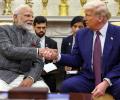
Amidst escalating tensions with Iran, the US has granted India a temporary 30-day waiver to continue purchasing Russian oil, aiming to stabilise global energy markets and encourage future US oil imports by India.

US Special Envoy Steve Witkoff and Iranian Foreign Minister Abbas Araghchi are reportedly heading to Switzerland for a new round of US-Iran negotiations, following a recently announced memorandum of understanding to end hostilities in West Asia and a ceasefire between Israel and Hezbollah.
Following the signing of a 14-point Memorandum of Understanding (MoU) with Iran, US President Donald Trump reiterated the terms for a 60-day negotiation period, vowing that Tehran will receive "not ten cents" in financial relief.

When asked about Bessent's announcement allowing certain Russian oil sales to India and whether the US is considering any other moves, including tapping the Strategic Petroleum Reserve (SPR), Trump said, "If there were some, I would do it just to take a little of the pressure off."
India is evaluating its involvement in the Chabahar port project in Iran due to potential US tariffs. The US had granted India a waiver for the project, but it expires soon. India is exploring options to continue supporting the port's development while minimizing exposure to US sanctions.

Friends of India in the US hope that New Delhi will receive a presidential waiver, given that Trump Administration has recognised India as a major defence partner and is in advance stage of selling billions of dollars' worth of equipment to India in the next few years.

Indian refiners have access to only limited Iranian volumes compared with Russian oil, and even the barrels on offer come with 'too many hassles'.

Is likely to give another six-month reprieve from financial sanctions to India, South Korea, Turkey and others.

Whether Trump will actually press ahead with the oil sanctions remains unclear, since keeping Russian oil out of the world market risks high oil prices which could boomerang on the US economy and be damaging politically for Trump, points out Ambassador M K Bhadrakumar.
Immediately on its return from the July 4th holiday recess, an angry Republican dominated US House of Representatives has lashed out against the Obama administration for providing India and several other nations waivers from sanctions for cutting its oil imports from Iran, and threatened to take legislative action to rebut the administration's reprieve to these nations, by passing tough new sanctions.

Indian refiners are recalibrating their crude sourcing strategy due to supply disruptions in West Asia, leading to Venezuela and Brazil emerging as top five suppliers in April, replacing traditional sources like Iraq and the United States.

Indian companies, however, are now paying a premium of $6-$7 a barrel for Russian oil, compared with discounts of $8-$10 a barrel before the start of the conflict.

Trump may strike. He may announce productive talks and extend again. He may do both at the same time. Iran will not open the Strait on someone else's terms, so no matter what happens, that problem will remain unsolved. And the IRGC will still be collecting its $2 million toll from every ship bold enough to ask permission to pass.

The logic of war plus the gathering storms in US politics as the midterms loom large leave him with no real alternative but to negotiate, points out Ambassador M K Bhadrakumar.
The United States has encouraged India to purchase Russian oil already at sea to mitigate supply shortages and price increases amid the West Asia conflict, according to Energy Secretary Chris Wright. This move is described as a short-term effort to stabilise the market without altering Washington's policy towards Russia.

US President Donald Trump and Russian President Vladimir Putin discussed the Iran conflict and its impact on global energy supplies during a phone call.

The US has temporarily permitted India to accept Russian oil already on ships to ensure energy supplies amid the conflict with Iran. This short-term measure is not expected to significantly benefit Russia financially.

Indian refiners are negotiating for additional crude cargoes from the US, Russia, and West Africa to ensure adequate supplies amid Middle East tensions. Refineries are maintaining normal processing rates and deferring maintenance to build reserves. The move comes as conflict impacts tanker movements through the Strait of Hormuz, a key energy transit route.

Iranian Foreign Minister Seyed Abbas Araghchi on Saturday criticised the United States over its stance on Russian oil, claiming Washington was now "begging" countries across the globe, including India, to purchase Russian crude.

The clock on the ceasefire is running out. But everyone's already whispering about round two, possibly as soon as this weekend.

It is learnt that India was mulling various options relating to the project after Trump administration threatened a 25 per cent additional tariff on countries doing business with Tehran.
